Bluebonnets in the fall.

Walking at dawn in the fall in Texas the yellows and golds and reds of the grasses and leaves tend to dominate.

Fall sunrise in Texas

But look closer, below the red and yellow grasses, and there are round, bright green seed leaves of Lupinus texensis– the Texas bluebonnet. After the heat of summer and the fall rains, around September or October, these emerald gems appear close to the ground. Soon afterwards, especially if there is more rain, the palmate leaves with their pointed hairy leaflets appear. On a morning with heavy dew the moisture collects on these leaves so that they shimmer like silver in the first rays of light, collecting little pearls of moisture at the base of the leaflets.

Dew decked bluebonnets in fall.

As the seedlings of these annuals grow they send down roots that have nodules. As members of the family Fabaceae they form symbiotic relationships with bacteria that fix gaseous nitrogen for the plant. This nitrogen gets passed on into the soil enriching it for other plants. In return the bacteria get carbohydrates from the plant.

Through winter storms these small green leafy rosettes wait for spring and the chance to flower. With good fall and spring rains fields of them will appear around March and April. The spike inflorescences of multiple blue flowers are easily identified as belonging to the pea family with the banner, wing and keel forming each flower.

Field of bluebonnets in Texas spring

Fall Color

cedar elm (Ulmus crassifolia)

cedar elm (Ulmus crassifolia)

While many parts of the country have begun their winter, here in Texas we are still enjoying the balmy days of Autumn.  While our fall color isn’t perhaps as dramatic as some places in the country we still have some lovely yellows and reds set against the backdrop of the evergreen cedar. (Juniperus ashei).  Cedar elms are tall stately trees that can be found on their own or hidden within the forest.  This year their small winged fruits covered the ground in September and October as their yellow golden leaves are doing now.

burroak2

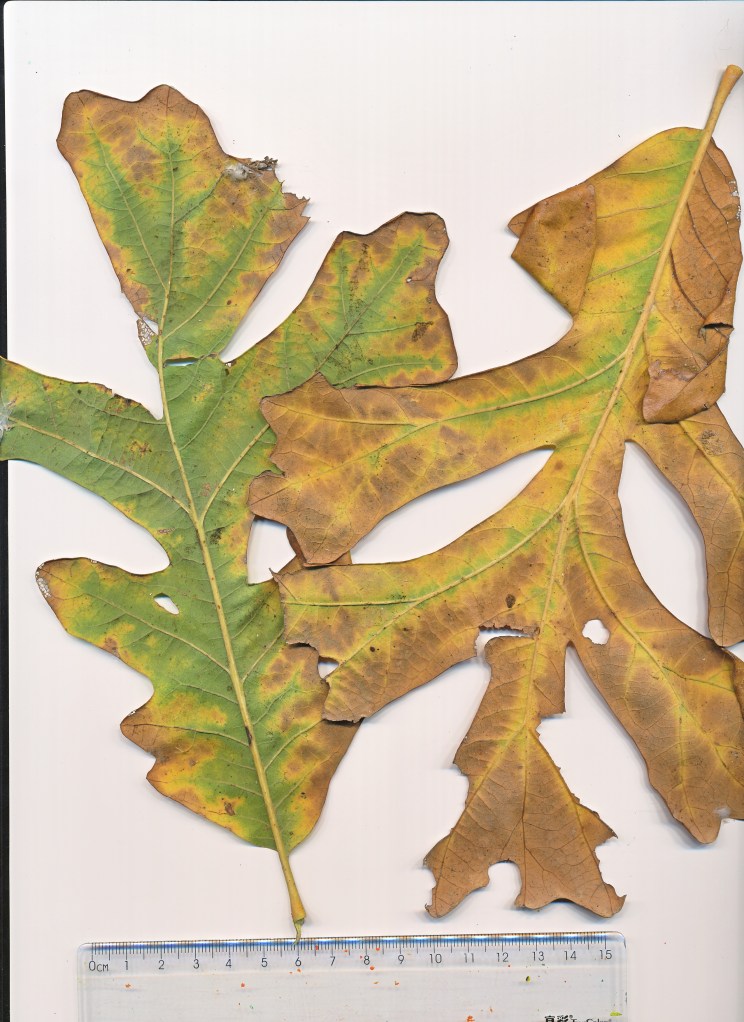
Bur oak (Quercus macrocarpa)

Another source for hints of gold on the hillside is the Bur Oak.  The leaves of this oak are enormous as are their beautiful acorns that have caps with dramatic “burrs” surrounding them.  A beautiful tree in a park setting this wonderful tree is now dropping its leaves, that are the size of a childs shoe, making a crunchy brown flooring for park goers to enjoy in the fall light.

spanishoak2

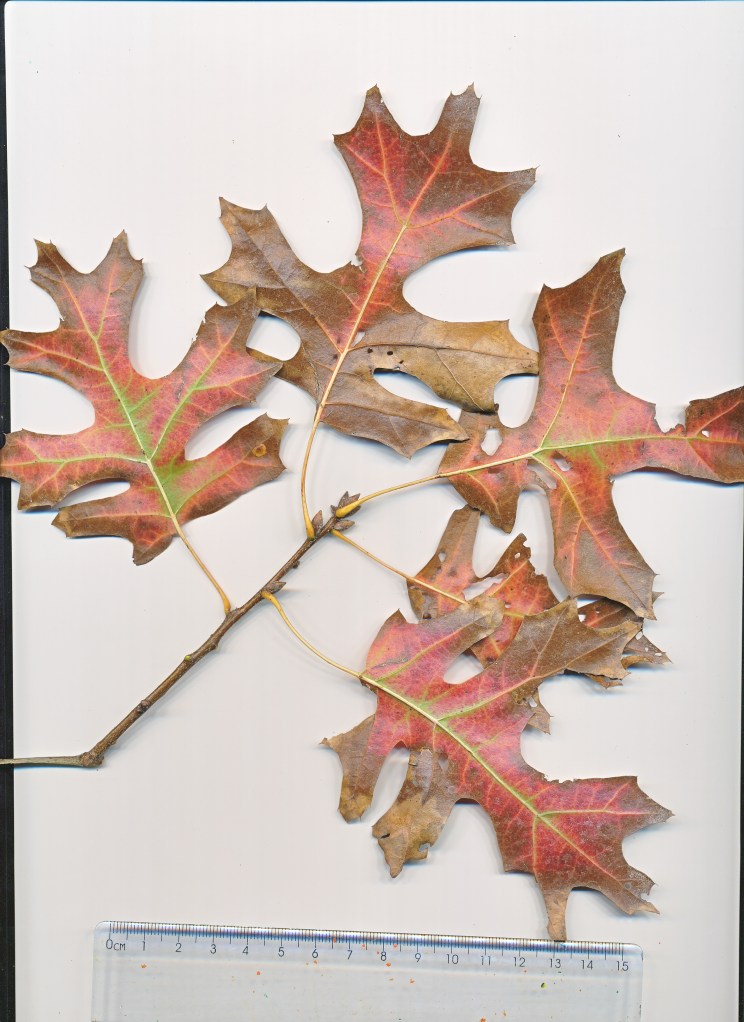
Spanish Oak (Quercus buckleyi or texana)

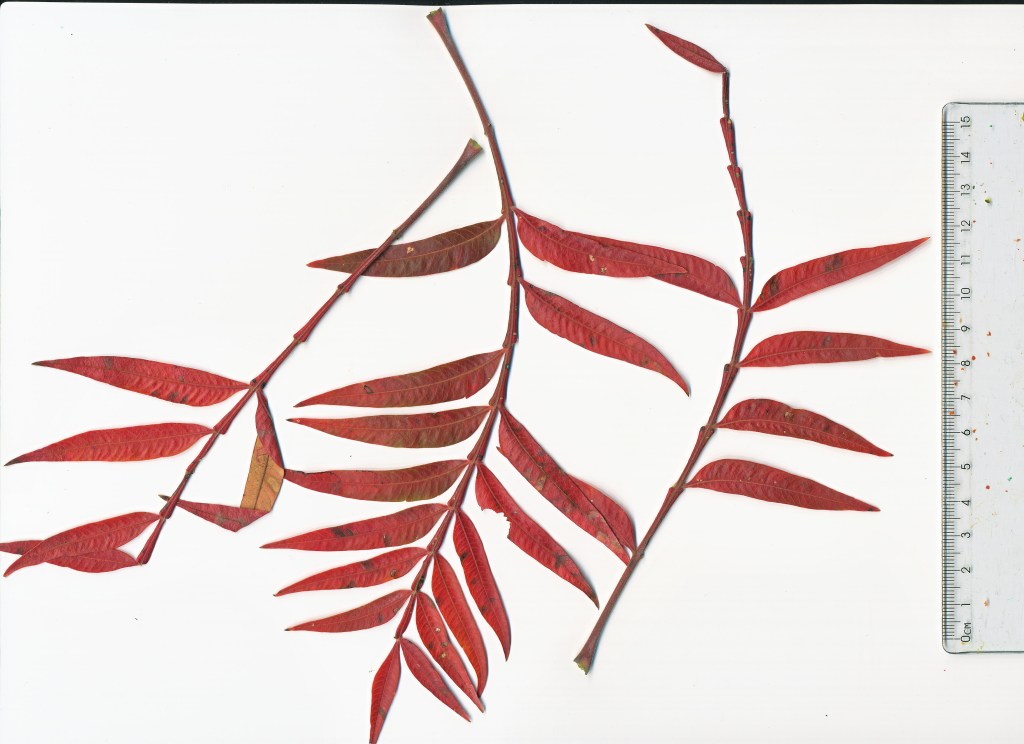
Oaks are also a source of dramatic reds seen along roads and on hillsides. The Spanish Oak belongs to the group of Oaks known as the Red Oaks and doesn’t disappoint. The identification of this fast growing species can be tricky as it has much in common with the Shumard Oak (Quercus shumardii) and Southern Red Oak (Quercus falcata). Another source of deep red is from a slightly small tree, the flame leaf sumac (Rhus lanceolata). This wonderful plant specimen changes from a vibrant green in the spring to a deep red in the fall. It candelabra like inflorescences of tiny cream flowers resulting in reddish seeds which marks the beginning of the change in late September/October. Their color emphasized by the late fall light they optimize winter metaphor of burning the old and opening ways for new beginnings.

flameleafsumac